Landscape organizes everything within sight.

Wednesday, October 19, 2011

What is Being Occupied?

The last 700 years of land use and capitalism have involved the deracination of people from their territory through the control of successive regimes of surveying, government, and money which today take the form of the environmental crisis, mortgage crisis, and landless peoples' rebellions of the global south. Without control over our own territory, there can be no possibility of a timely and appropriate response to the environmental crisis. Without cheap rent, transportation, or civic permission to be homeless in our cities, people have no right to life. Without protests in public space, new critiques of politics might never be voiced. Together these constitute the right to the city. An occupation takes place in the city. A political movement that occupies public space hardly needs a set of demands or a clear consensus to make clear its statement. In the history of capitalism, the right to public space has been challenged, and resistance is necessary to secure the right to the city.

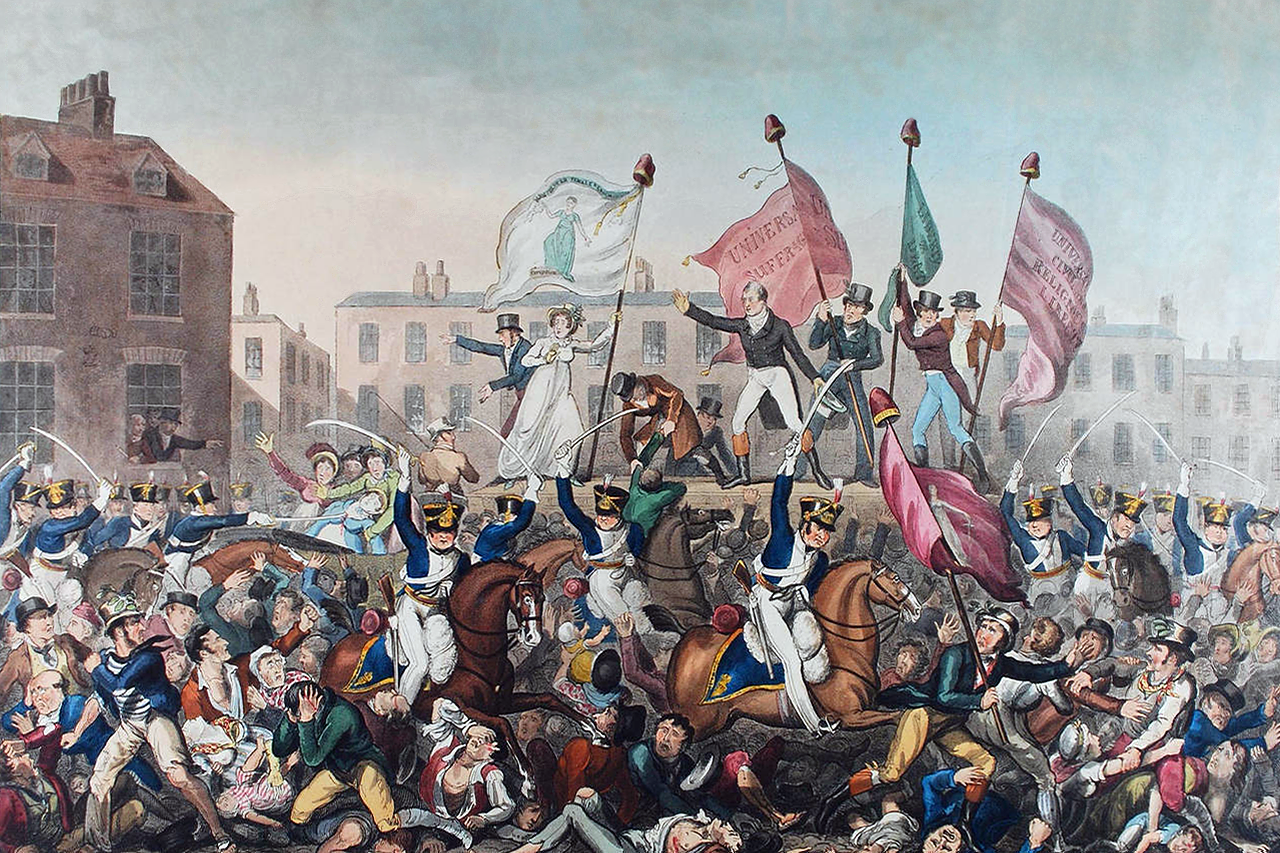
One can think backwards to nineteenth-century struggles over the right to the city, from the Peterloo massacre of trade-unionists in Manchester suppressed by the police in 1819 to the working-class cafe society exiled from central Paris after the 1860s to the German anarchist organizations kicked out of Tompkins Square Park in New York in the 1880s. Each of these movements had to occupy space, and had to fight, frequently through violent confrontations, for the right to occupy the city, to organize people too poor to afford their own journalists or politicians, whose livelihoods were threatened by escalating rents. The right to the city -- to inhabit it, to participate in its governance, to reshape it -- is a right that has to be continually renewed. Over the last four decades we have sat upon the accomplishments of the 60s, the settlements bequeathed from lunch-counter sit-ins and free-speech protests. But those rights are now in question. Through the extension of private ownership the vry parks in which Occupy Wall Street protestors now sit are privately-held parcels opened to the public at the pleasure of a private corporation. Our right to the village green has become so tenuous.

An occupation by the people is a taking up of space by the people. It takes up the vacant concrete spaces slid through by glanceless men in peacoats and umbrellas. It takes up the concrete corridors clogged by heavy-moving SUVs. It takes up the visual space crowded by advertisements featuring half-naked women in perfume. It replaces all of that open, lifeless city with another city, a human city of faces, of voices, arguing, debating.

It is the remarkable fact about this protest that it has *not* produced a set of demands, as did the soviets or SDSers or even hippies. No consensus will fast emerge from the anarchists, teapartyers, grad students, and marines who are gathered here. They speak no common language. They agree on very few points except for their mutual duty to occupy. They are beginning a new conversation, but what they have done -- unprecedented in forty years -- is to stage an occupation, to enumerate all that has been lost when we lose our mortgages, our environment, and our right to public protest, and to demand the right to the city.

(this dispatch from the library tent at #OccupyBoston)

Labels: , , ,

Thursday, October 13, 2011

The Slow Burn of the 99 Percent

It is the mark of a novice historian to cast about fitfully when seeking for comparisons, and for that reason, the protestors of Occupy Wall Street confound amateurs. The marchers don’t fit the model of the 60s or the antiwar marches of 2002-6. They cannot be summed up under the name hippie or under the understanding of religious action in the public sphere as it has appeared for the last half century. When Harry and the Potters played Occupy Boston, they brought an infusion of pure middle-class nerd self-righteousness to the streets, not unlike the ivy-league lawyers who were trapped on the Brooklyn.

Nor is the movement merely white and middle class. Amidst the speakers in New York rally black gospel choirs and savvy Latino youth armed with AV equipment. The diversity movements of the last thirty years have born fruit. It is a foregone conclusion, in some liberal and even bourgeois circles, that their struggle and our struggle have a deep relationship. In terms of demands, today’s movements have less to do with the largely white protest movements of the last thirty years, and more to do with the French and British riots of 2008-2011, when the unemployed poor, facing the end of government services and a string of incidents linked to the racist deployment of police violence.

Then, of course, there are the preachers. One out of every five Youtube videos features one, dressed in white shoes and a collar, railing against corruption in the building. Stephen Colbert crosses his arms in another image, widely reposted, and demands that the American public either renounce its claim to Christianity or take the demands of the poor more seriously. Images such as these, vaunting financial reform within a religious ethic, have circulated widely in the past three weeks, bringing strains of spiritual foment to bear on public life. It is likely that they reflect the mounting of a long revolution in American public life. Over the last decade, an evolving community on the Christian Left has challenged the Right’s fixation with abortion and gay marriage, drawing attention back to biblical injunctions of solidarity with the poor that many argue are, textually and historically, at the heart of the Christian religion.

If the Occupy movements are allied with any previous political movement, it is neither the antiwar hippies who occupied the streets of San Francisco in 2002 nor the Democratic Party. Far closer is the anti-foreclosure movement, which has rallied middle-class attention, labor, and ethnic protest together in a slow pooling since 2008. Anti-foreclosure is an event, a solid indictment of a financial system corrupt to its bone. It has been slowly escalating, building the support of labor in places like Chicago. It requires the reform of the legislature: both parties from the 1990s helped to deregulate the markets, removing safeguards that had protected homeowners from the ravages of the market. It cannot trust the courts: judges foreclosed upon homes without reading the documents in many cases. It finds the presidency irrelevant, a presidency concerned with the international stability of markets, but whose stimulus was in every way insufficient to promote a better infrastructure that would connect poor workers and jobs.

What can be said about a movement that holds public space for three weeks in a thousand separate cities, with up to 20,000 people in New York alone? Pundits pout while they wait for an answer to the question of what they represent, but these people, clearly, already represent themselves: nerd, black, brown, spiritual, committed to the lives of the people who suffered when the foreclosure crisis hit.

Demands for financial reform, mortgage protection, and the cleansing of lobbyists represent reactions to a wedding of bank and government that has only arisen over the last thirty years. They rise on the foundations of a spiritual movement that has only been gathering force for the last decade. If the movement looks different from other movements of the last ten, twenty, or fifty years, it is because they represent the culmination of a slow burn.

Labels: ,